

Criticism as an afterlife
What happens when criticism evolves from a tool of judgment into a creative practice that extends the life of a work?
by Shereen Saif
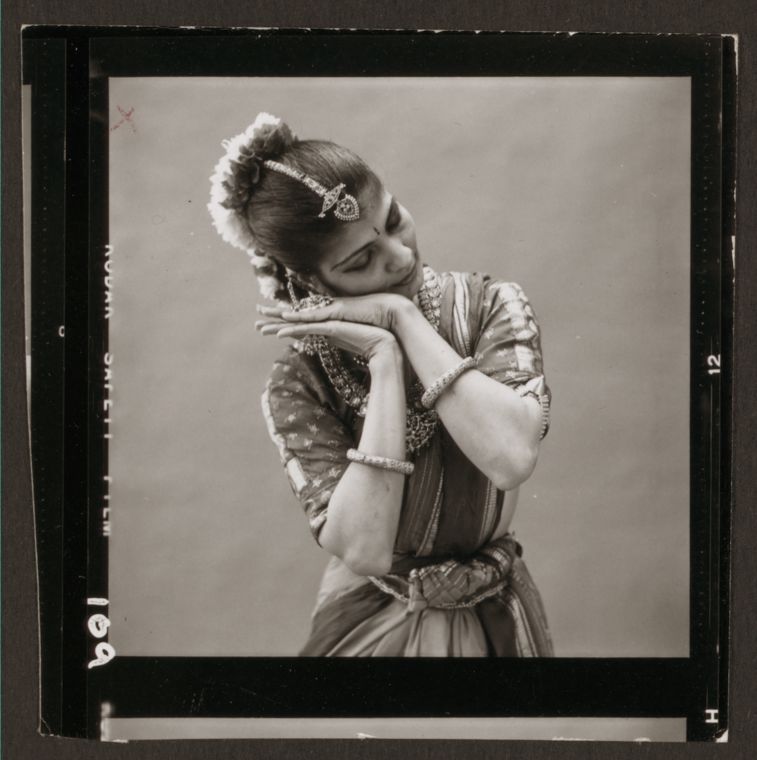
Shanta Rao, one of India’s most influential classical dancers of the twentieth century, spent much of her career fending off strong opinions about how classical dance ought to look. Trained in forms including Kathakali, Bharatanatyam and Mohiniyattam, she often found herself at odds with critics who preferred clearer boundaries between traditions. When she made her Bharatanatyam debut at the Music Academy in Madras in 1942, reviewers dismissed her dancing as “stiff,” “exaggerated” and “rather masculine,” arguing that traces of Kathakali had seeped too visibly into her performance.
Then something unexpected happened.
The British dance critic Arnold Haskell saw Rao perform and described her as “a dancer of genius.” His words did more than praise her. They offered a counter narrative, inviting audiences to see her work with fresh eyes.
I often return to this story because it reminds me that performance histories are shaped not only by what happens on stage but also by the people who write about them. A performance is fleeting by nature. It disappears the moment it is over. What remains are conversations, reviews, photographs, documentation, memories and rumours. Writing, then, becomes one of the ways a work continues to live.
Yet, writing on performance often finds itself caught between a few familiar positions: the harsh review, the detached journalistic blurb, or the diplomatic insider response. More often than not, the critic writes from outside performance practice, becoming a kind of referee who decides what counts and what does not.
Performers rarely don the garb of a critic with confidence. To write critically about one’s peers or seniors is a precarious undertaking. We are entangled in the same artistic communities, sharing stages, festivals, friendships and futures. Direct criticism can feel risky. Silence often feels safer.
So, I find myself asking a different question: what if criticism did not begin with judgment? What if it could be a way of noticing what stays with us through ideas, images and sensations that continue to resonate long after the performance has ended. What if criticism could generate new ways of seeing, and perhaps even new works of art?
Criticism as an Act of Continuation
Performance criticism is hardly new. From Greece to India, thinkers like Aristotle and Bharata were deeply interested in why some performances moved audiences while others did not. Yet, the very words critic and criticism derive from the Greek kritikos, meaning “able to discern” or “able to judge.” It is perhaps no surprise then, that for centuries the critic’s role was understood as one of evaluation. As print and later digital media expanded, the review became the default mode of criticism: a place to pronounce success or failure and shape public opinion.
By the 1960s, however, that way of thinking began to shift. In Against Interpretation, Susan Sontag argued that critics had become too busy explaining art instead of experiencing it. Rather than asking only what a performance means, she encouraged us to pay attention to how it catches us off guard and changes the way we see, hear and feel. Since then, many writers have imagined criticism differently not as a verdict but as a form of attention. This is where I find myself drawn to Matthew Goulish and Jane Rendell.
In Small Acts of Repair, Goulish writes about what he calls “miraculous moments”: unexpected instants of a performance that stay with us long after the curtain call. Instead of asking whether a work is good or bad, he asks us to notice what continues to resonate, what keeps unfolding in our minds, and what new questions it leaves behind. Those lingering moments can become the starting point for entirely new acts of creation. In that sense, criticism does not close a conversation; it keeps it alive.
Rendell arrives at the similar place from a different direction. In Site-Writing, she argues that writing about art can never be completely objective because the writer is always part of the encounter. Rather than pretending to stand outside the work, she proposes “writing alongside” it by allowing memories, emotions and lived experience to become part of the critical response. Criticism, then, becomes about entering into a relationship with a work and seeing where that relationship might lead.
I found these ideas both generous and liberating. What would happen if, instead of looking for flaws, I paid attention to what stayed with me? What if I allowed a performance to linger and followed wherever it led? I wanted to see what would happen if I put that into practice.
An Encounter, a Creative Response
Last year, as part of Soho Theatre Walthamstow’s launch season, I watched Bog Witch, a solo performance by British performance artist Bryony Kimmings. Blending comedy, storytelling and performance art, the show draws on Kimmings’ move from urban life to the countryside as it explores consumerism, ecological crisis and our relationship with the natural world.
It was hilarious and rich in inventive image-making. Yet what stayed with me was something else entirely: the cackling witch who appeared in a flash of light at the beginning of the performance, only to re-emerge later in abstract images that I remember as evoking a witch being burned at the stake. Or perhaps that is simply how my memory chose to hold on to it.
In Orange Dogs and Memory Responses, Katja Hilevaara reminds us that memory is imaginative as much as it is archival. We do not replay performances exactly as they happened; we reconstruct them through subjective recollection, and what we remember can be as significant as what actually unfolded on stage.
The witch became that kind of memory for me. Not just the figure Kimmings created, but one my own imagination continued to shape: an unruly feminine presence existing outside conventional expectations of age, beauty and decorum. It lingered somewhere between performance and recollection, refusing to leave.
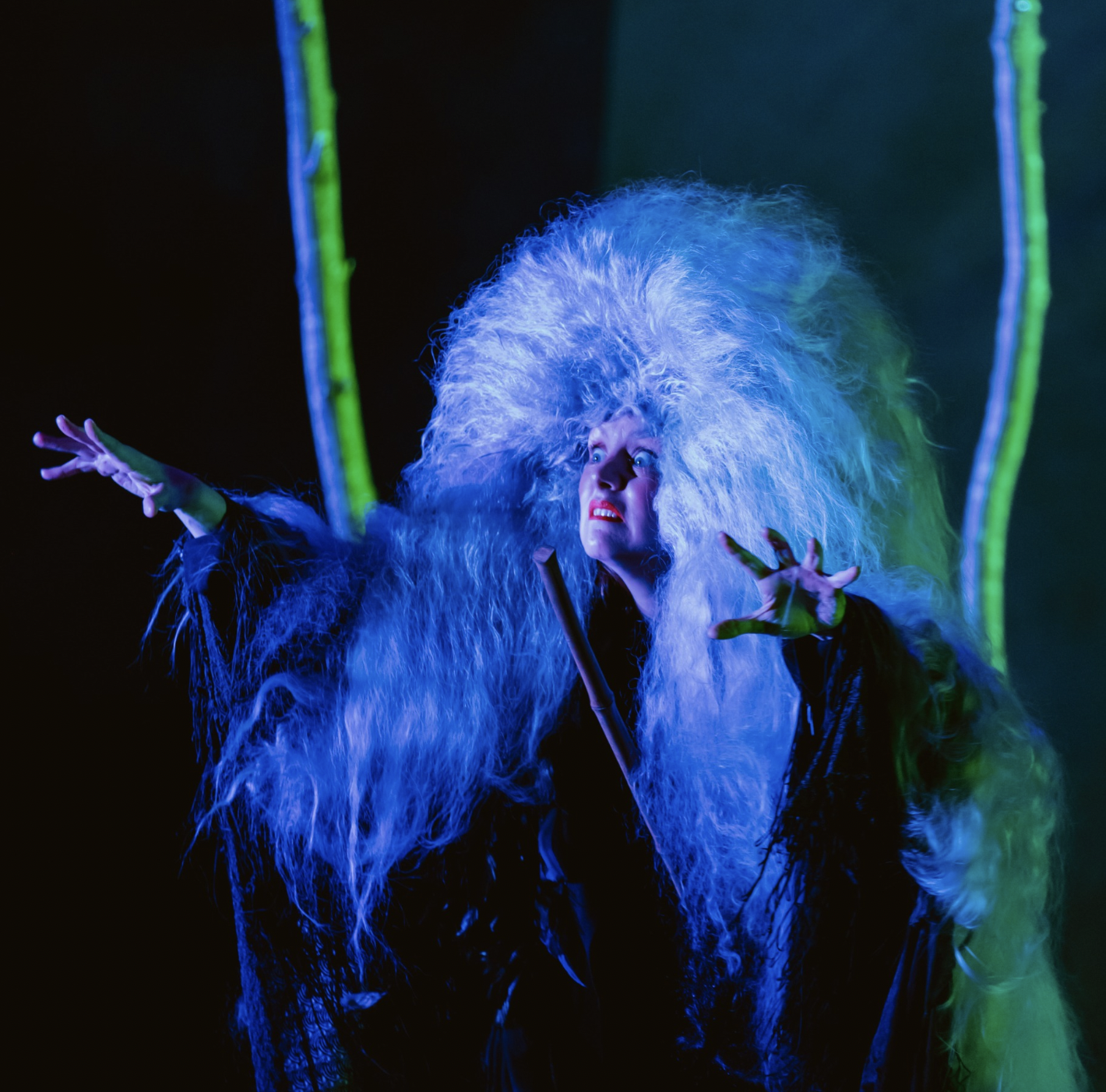
I realised that what fascinated me was not the witch as a supernatural figure but as a woman who had slipped beyond the boundaries of polite society. I kept returning to her, wondering what might happen if she were seen not as someone to fear but as someone to learn from.
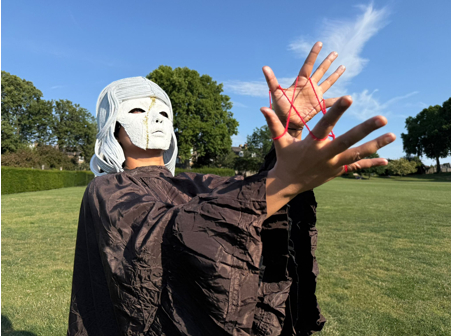
That question eventually found its way into Polymorpher, a collaborative performance co-created with Reema Assaf and Suyoung Chun. Weaving together ritual, shadow theatre, storytelling and dance, the work follows three sisters on a journey of transformation under the guidance of The Elder, a figure who walks between worlds. Here, the “witch” is reimagined as The Elder, a knowledge keeper and healer through whom I explore ageing beyond familiar stories of decline and invisibility. The witch also appears in another form in the show as a potion maker and storyteller. In that sense, Polymorpher became my way of writing alongside Bog Witch. Rather than evaluating Kimmings’ work, it entered into a conversation with it, extending one image into another and allowing a lingering encounter to become the seed of a new artistic work.
Perhaps this is what the performer-critic can do best: not deliver the last word on a work, but give it an afterlife.
References:
Bottoms, Stephen, and Matthew Goulish. Small Acts of Repair: Performance, Ecology, and Goat Island. Abingdon: Routledge, 2007
Hilevaara, Katja. Orange Dogs and Memory Responses: Creativity in Spectating and Remembering. In M. Reason & A. Mølle Lindelof (Eds.), Experiencing Liveness in Contemporary Performance: Interdisciplinary Perspectives (pp. 34–47). Routledge.
Khokar, Ashish Mohan. “Shanta Rao: The Enigma and the Legacy.” Narthaki. Accessed, 2026. Narthaki article
Rendell, Jane. Site-Writing: The Architecture of Art Criticism. London: I.B. Tauris, 2010.
Sontag, Susan. Against Interpretation and Other Essays. New York: Farrar, Straus and Giroux, 1966.
List of Images
- Billy Rose Theatre Division, The New York Public Library. Shanta Rao. The New York Public Library Digital Collections, 1850–2020. https://digitalcollections.nypl.org/items/9d4acde0-ff8a-012f-578e-58d385a7bc34.
- Kimmings, Bryony. Bog Witch production still. Photograph by Rosie Powell. Instagram post, 2025. Accessed 15 June 2026.
- Polymorpher. Rehearsal photograph of the artist as The Elder. Photograph by Suyoung Chun, 2026.
About the Author
Shereen Saif is a writer and multidisciplinary artist whose practice spans dance, theatre, oral storytelling, conceptual art and foraging. Based between Bangalore, Dubai and London, her work explores the intersections of movement, narrative, technology and ritual. Rooted in the Indian ethos, she draws on gesture, symbolism and performance traditions to investigate identity, memory, belonging and oral tradition.
 SIGN IN WITH GOOGLE
