

Paradox of Distance and Writing on Art in the Contemporary Period
Does reviewing exhibitions through online media deplete art criticism or transform it?
By Bhruvi Bhatia
The layers of reds are stacked upon each other, wrestling until they seem to discover a place to repose. Is it the way they accumulate that lends the impression of a drain or does the familiarity of movement creates an impression of one? — I ask myself as I peer into a painting at my friend’s makeshift studio. The painting appears to be at the cusp of becoming. “It feels like an abject in the making,” I tell her, contemplating what it makes possible to feel. She with an impish grin replies that it is not a drain eager to swallow red but a red traffic light.
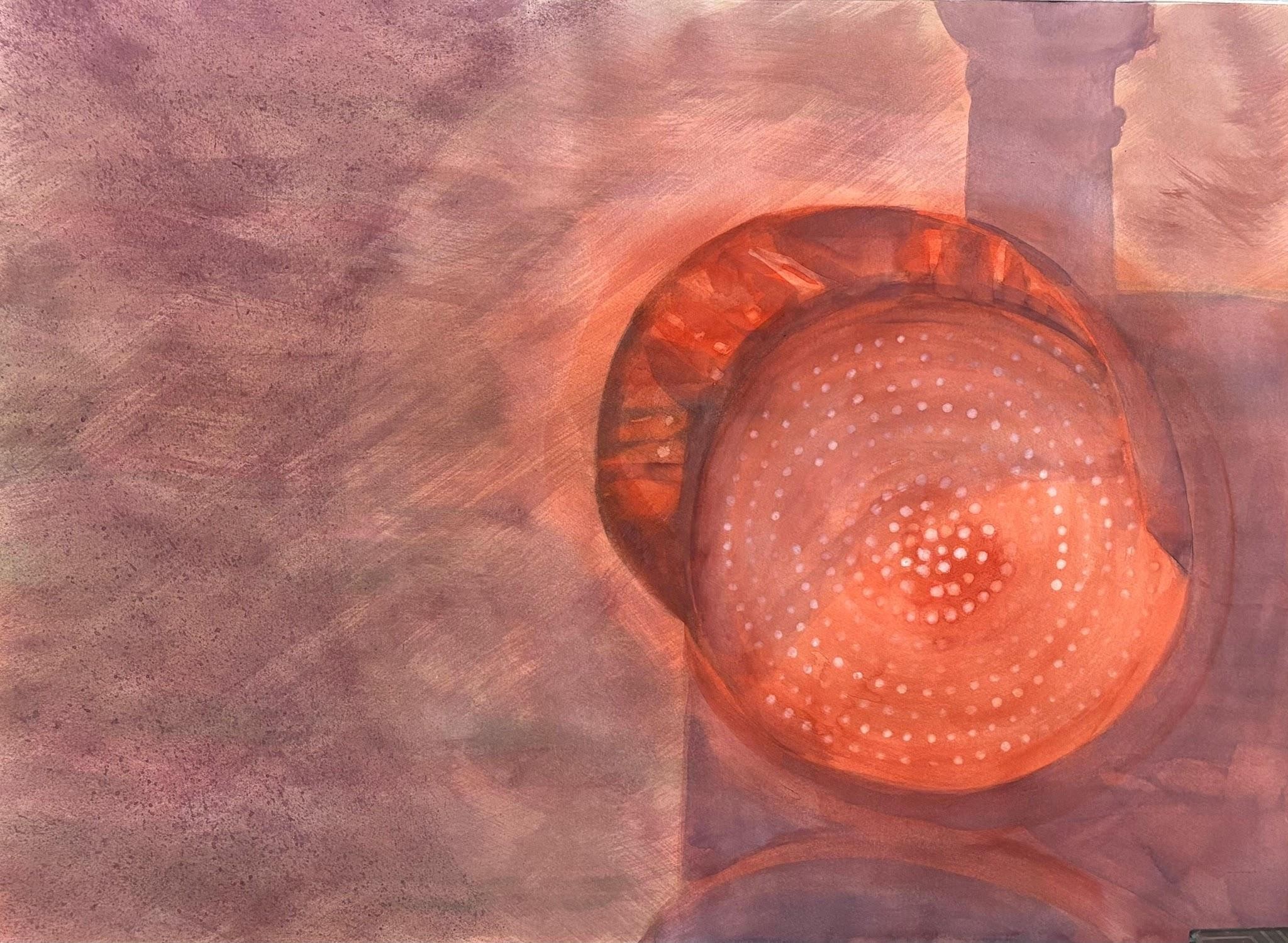
The exchange is embarrassingly ordinary. A brief act of description dissolves the ambiguity; a title, a few words from the artist, and the artwork folds into meaning. Yet that moment foregrounds a question that has hovered over decades of art and literary criticism: what authority should be granted to the artist’s intention, and what remains the critic’s to produce? It is as quickly resolved as it emerges, deftly absorbed into familiar theoretical vocabulary. Perhaps the imagined drain is a “punctum,” an unintended detail that arrested my attention despite lying outside the artist’s intention. Or maybe it simply affirms Barthes’ well-known decentring of the author, where meaning is constituted in the encounter between text and reader rather than hinged to the point of creation.
The essay is concerned with a different, and comparatively underexamined, condition that shapes contemporary art writing: distance. Not the distance between artwork and viewer, as discussed, but the mediated, temporal, institutional, and technological distances through which artworks are now encountered, interpreted, and circulated. Before the question of what an artwork means lies another: from where, and through what conditions, does it become available in the first place?
As a writer, I have written more than a dozen exhibition reviews for Musée Magazine, often without being physically present at the exhibition; my engagement was, instead, mediated through press kits, exhibition catalogues, and installation photographs. In an era where exhibitions increasingly privilege immersion and scale, this absence looms like a deficit. How does one write about the ephemerality of a performance or the affective charge of proximity through a flat screen?
The personal reflection coalesces into what I like to call the paradox of distance: while physical absence purports to diminish perspective, it often compels the critic to attend more intimately to textures and curatorial decisions. Since what is at stake is tridimensionality, I turn to two specific exhibitions whose very conception rest on these apprehensions.
Lived In Skin: Textile as Armour as Memory, a group exhibition presented at Latitude 28, featuring works by Sabeen Omar, Meenakshi Nihalani, and Anshu Singh, approaches textile as a repository of memory, labor, and inheritance. Fabric is treated as something lived with, carrying within its folds the traces of bodies and the weight of everyday life. On a cursory glance, the exhibition’s bent on tactility tends to resist mediation, making it a fertile site through which to test the limits, and possibilities, of writing at a distance.
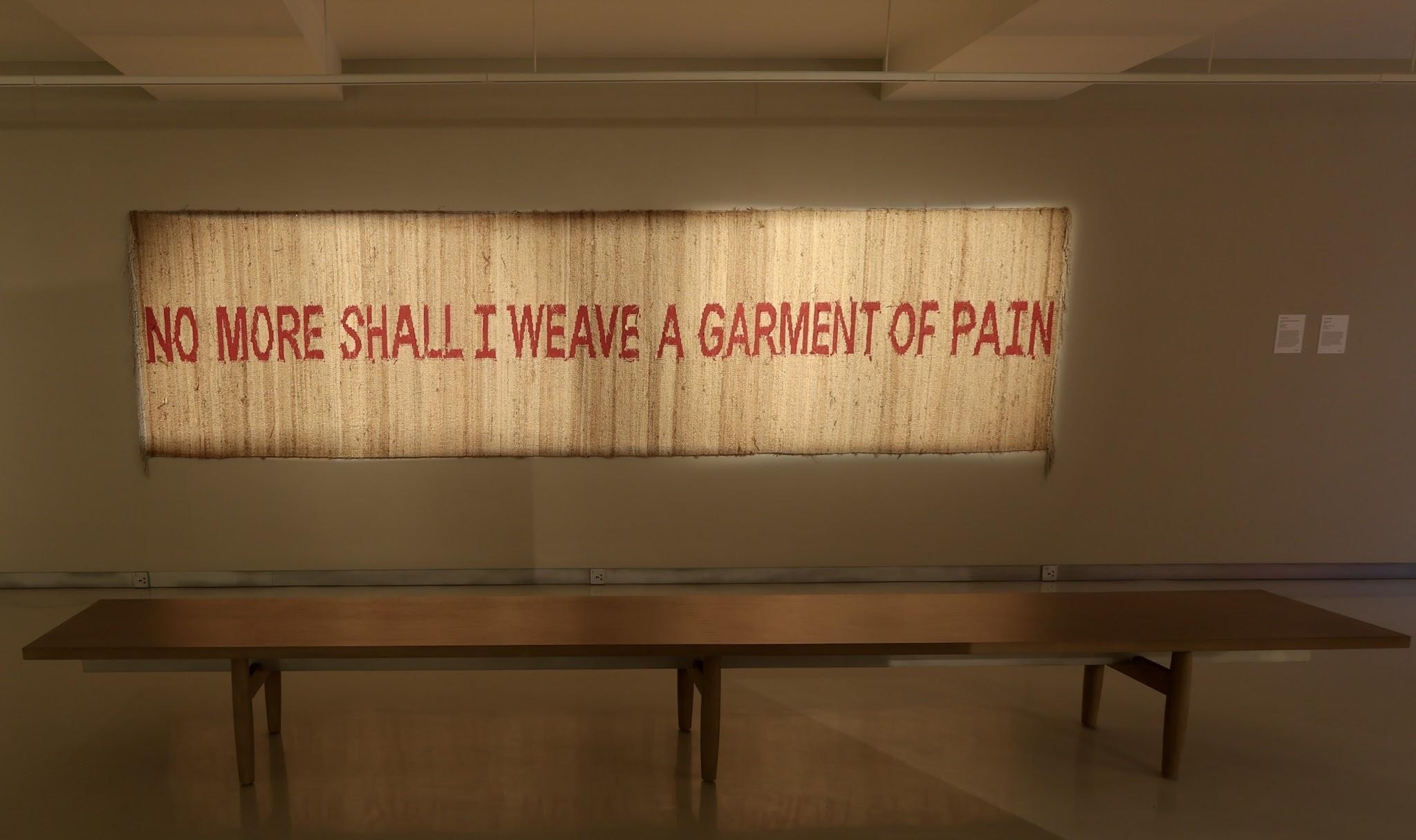
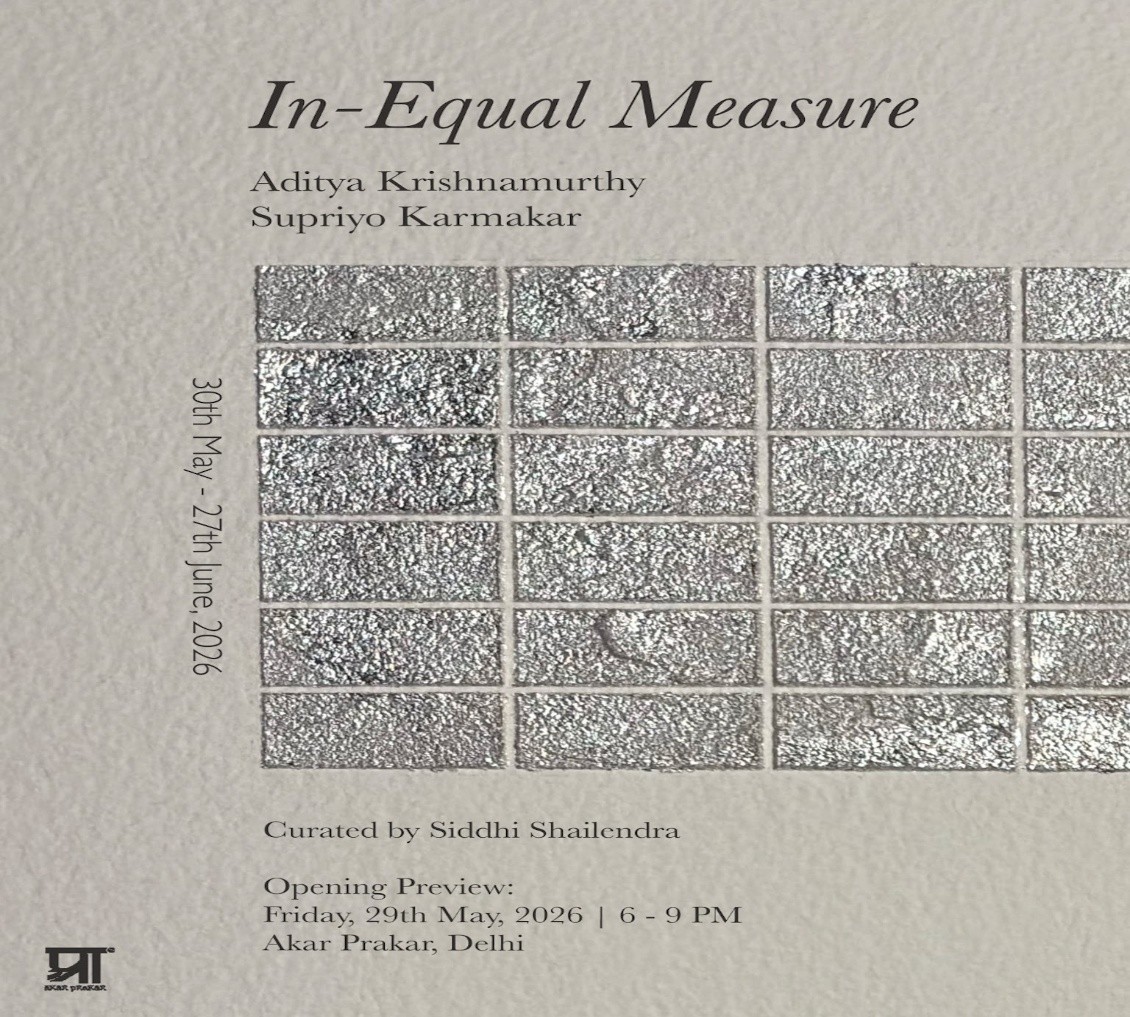
In-Equal Measure, exhibited at Akar Prakar, stages an equally demanding proposition. Bringing together the practices of Aditya Krishnamurthy and Supriyo Karmakar, the exhibition exploits line as a shared visual language. Krishnamurthy cultivates contemplative experience of time’s passage. In Karmakar’s practice, the line assumes the form of thread, where ostensibly equal units of material meld into garments, which reveal, and intensify, unequal social evaluations attached to cloth. Read
together, the works insist upon the inseparability of time and space. They stimulate the viewer to move, pause, compare, and inhabit the interval between lines.

The Illusion of Whole-ness
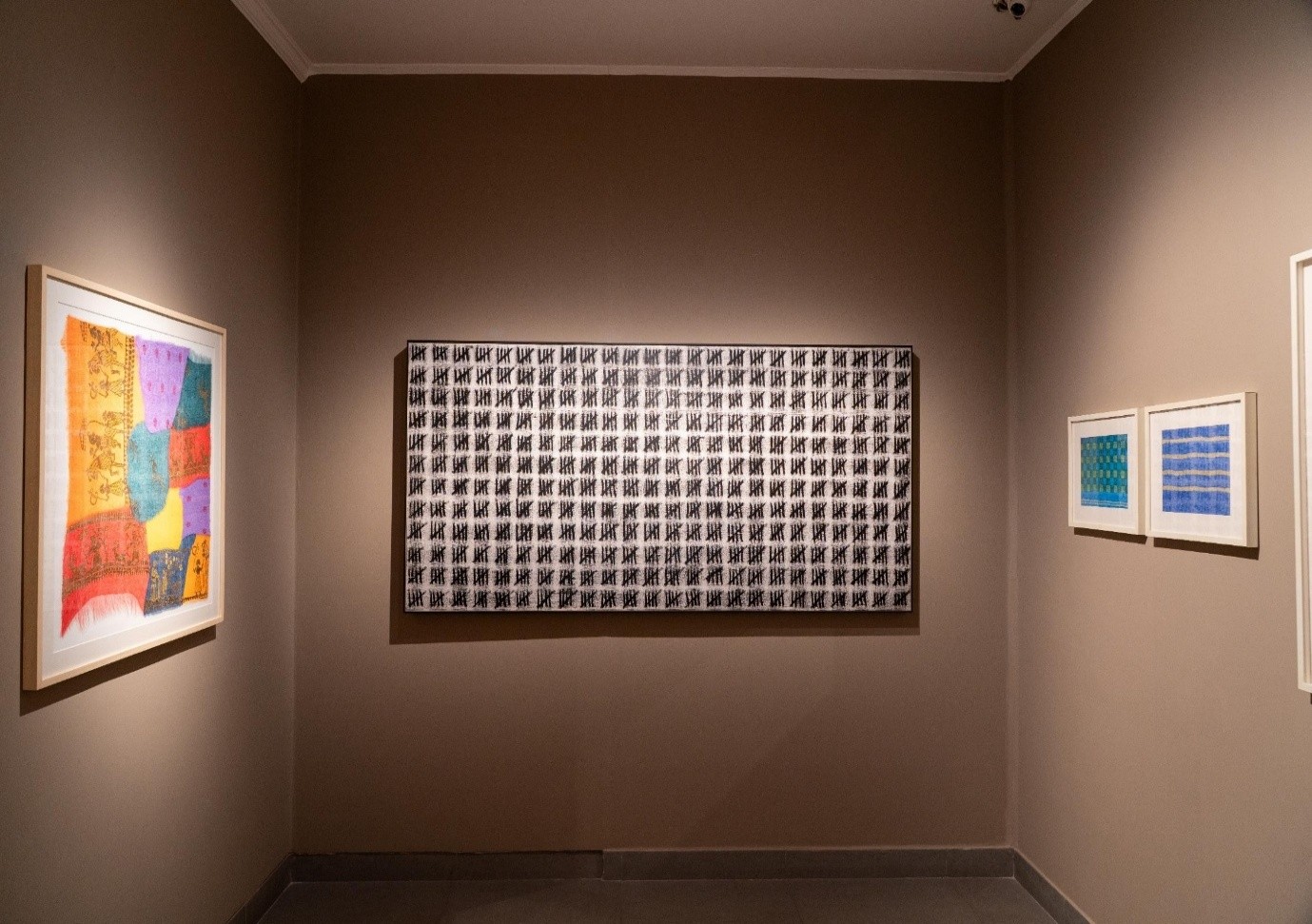
As I enter Akar Prakar, I witness a fragment of a painting. The part of it is concealed by the wall on which Karmakar’s archival prints are displayed. The painting arrives before me as incomplete, yet I instinctively register it as a whole, its partial visibility sustained by the continuity of the exhibition space. Even as I move myself closer to a new work, Keeping score no. 2, that occupies a wall of its own, my gaze refuses to be contained within its frame; other pieces linger in my peripheral vision, the light rushing through the canvas shared by them. The artwork’s meaning is constituted relationally through this illusion of whole.
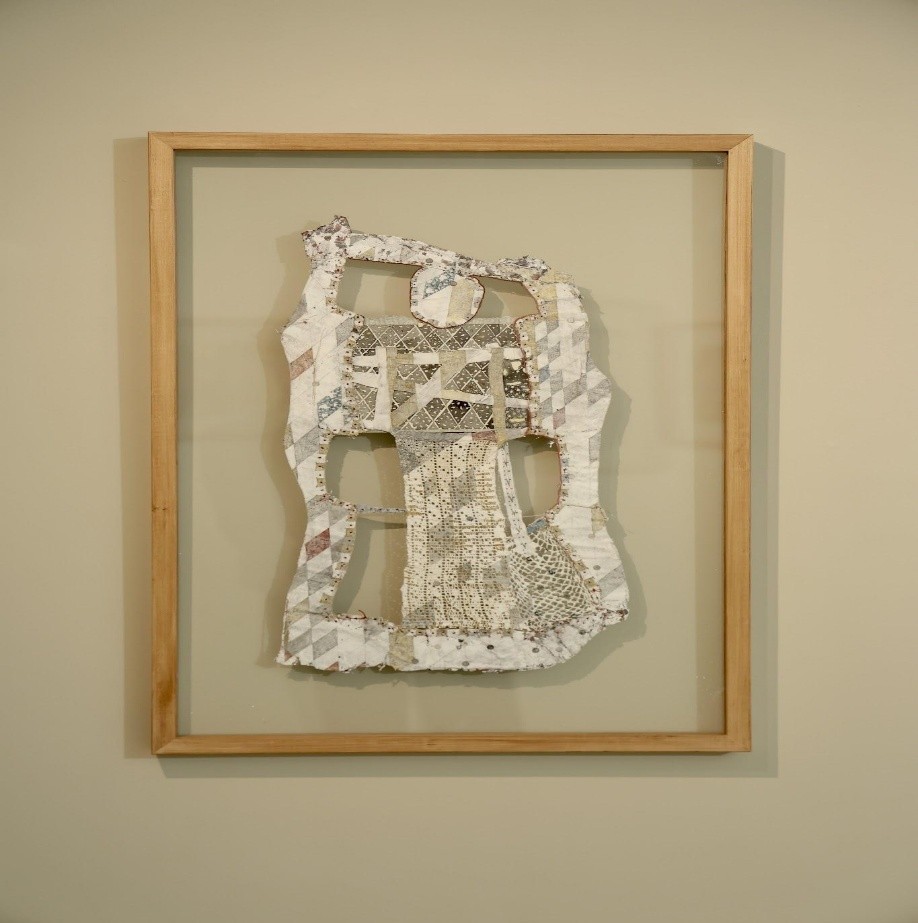
A similar experience unfolds at Latitude 28. Standing before where does longing rest?, I catch my own shadow falling across the suspended textile. My reflection briefly becomes part of the work’s surface. The encounter acquires renewed significance because the work itself conceives of cloth as an intimate companion to the body. Such moments are exacting to anticipate through documentation alone. They stem from the contingencies of visiting the exhibition.
When the three-dimensionality of an exhibition is translated into separate digital reproductions of its constituent artworks, it inevitably relinquishes a mode of seeing; within the two-dimensional logic of the screen, architecture, scale, and movement no longer organise perception the same way. However, the distance does not subtract from experience. Emancipated from a network of relations and immediacy, each artwork presents itself on screen as self-sufficient, soliciting an intensity of looking seldom afforded within the gallery. If the exhibition causes an illusion of whole, the image also creates a similar fictitiousness: each artwork exists as a complete object.
To fully comprehend this illusion of whole-ness conferred by singularity of artwork on screen and the peculiar intensity of attention it yields, Laura Marks’ notion of haptic visuality becomes particularly productive. She describes a way of looking where “the eyes themselves function like organs of touch.” Although she predominantly formulates the concept through moving images, it is evenly essential for digital encounters. Rather than observing an artwork with physical detachment, the illusion of whole-ness invites an intimate proximity; the gaze settles on the grain and material resistance of the artwork, as though experiencing tactility through vision.
Marks says, “haptic looking tends to rest on the surface of its object.” Consequently, textures garner an unusual austerity. It is exemplified by my interaction with Omar’s works where I initially mistook parts of paper for textile. The physical proximity, as one would anticipate, didn’t immediately dispel confusion. If anything, digital reproductions of the same works inspired a more deliberate engagement. As I was conscious of meeting one medium through another, I returned to the exhibition catalogue and material descriptions. Thus, mediation didn’t reduce knowledge, it just transformed the epistemic process through which it was produced.
A comparable instance occurred at Akar Prakar. The Emeritus posed itself to be manufactured from cloth, only to disclose itself as a simulation of fabric. Just as the reproduction of artwork demanded that I distrust my vision and examine the image more sincerely, the exhibition itself asked the viewer to look beyond the deceptive homogeneity of threads towards the unequal histories of class woven into cloth. The act of looking through the screen became implicated in the meaning-making. My hesitation, revision, and return were no longer responses to the artwork; they came to mirror its very thematic force.
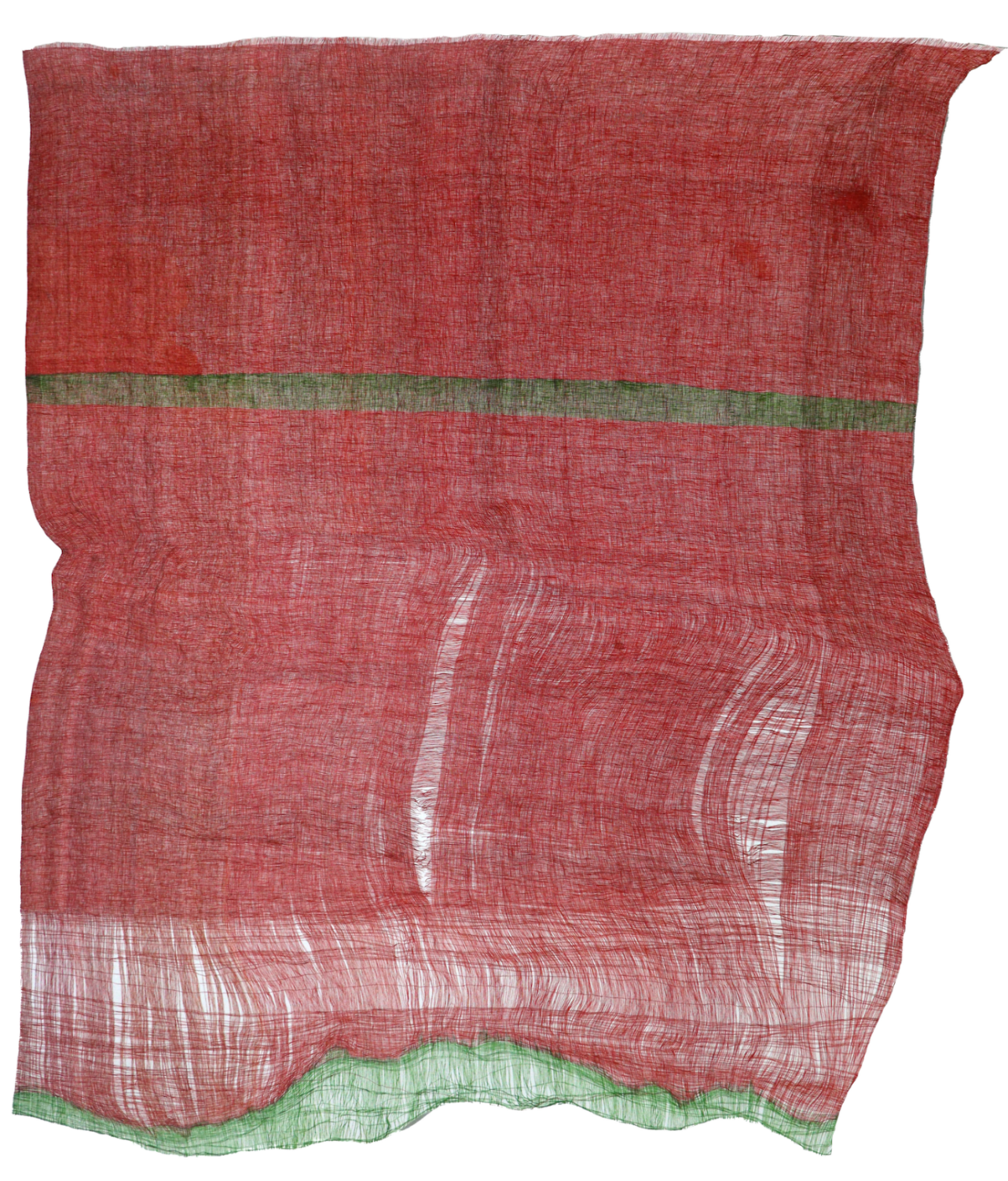
The screen, after all, remains an image fashioned by human hands; it carries the vestiges of material labor and stretches of time even as it mediates them. As noted, the proximity the illusion of whole-ness begets, can occasionally accentuate those qualities or meanings envisioned to suffer. So, the tactility and the endurance of time which was at risk, as expressed at the onset of this section, is therefore not simply lost but differently constituted through mediation. This is the paradox of distance. As one mode of encounter recedes, another comes into being and simultaneously opens the prospect of a slower, more tactile, and distinctively attentive way of seeing.
Filling Gaps
If distance augments ways of seeing, it also mobilises imagination as another means of interpretation, enabling the viewer to anticipate what remains beyond perception. At the kernel of the concept, lies intimacy. Unable to encounter the exhibition in person, the viewer begins to inhabit its possibilities: the route the body might take through the gallery, the shifting relations between objects, light, and movement.
The realm of possibility also offers a response to the question: what becomes of the critic’s role in an age where circulation precedes encounter? More often than not, one comes to know of the exhibition through social media announcement, a cropped image of the artwork overlaid with text, sometimes a curatorial note positioned beneath it. Signifier and signified may look momentarily fused together; meaning seems readily available. The critic’s task, then, is perhaps not to secure interpretation but to lay it open — to attend to possibilities, eventualities, and relations that remain in excess of what is instantly given.
This essay has been an experiential account of that process. While a growing body of scholarship has scrutinized the differences between encountering artworks in person and through digital reproductions, less attention has been paid to viewing undertaken with the explicit intention of criticism.
References:
Barthes, Roland . Camera lucida: Reflections on photography. Translated by Richard Howard. United States: Echo Point Books & Media, LLC, 2025.
Barthes, Roland. “The Death of the Author.” In Image, Music, Text, translated by Stephen Heath, 142–48. New York: Hill and Wang, 1977.
Key, Laura E. B., and Brittany Pheiffer Noble. An analysis of Ferdinand de Saussure’s course in general linguistics. London: Routledge, 2017.
“Laura Marks on ‘Haptic Visuality’ and Some (Haptic?) Stills from Zidane: A 21st Century Portrait,” October 18, 2024. https://digitalcinemauoft.wordpress.com/2014/10/28/laura-marks-on-haptic-visuality-and-some-haptic-stills-from-zidane-a-21st-century-portrait/.
Marks, Laura U. Skin of the film: Intercultural Cinema, Embodiment, and the senses. Duke University Press, 2000.
Marks, L. U. “Video Haptics and Erotics.” Screen 39, no. 4 (December 1, 1998): 331–48. https://doi.org/10.1093/screen/39.4.331.
Writer’s Bio:
Bhruvi Bhatia is a writer and researcher based in Delhi. She holds a Masters in English and Cultural Studies from India. She has recently received a grant from India Foundation for the Arts, and has written extensively for Musée, a visual arts magazine based in New York. Her research spans visual studies, spatial studies, and artistic and heritage practices. She has presented her work at various national and international conferences, held research positions at leading institutions and worked on projects exploring questions on decolonisation.
Foreign Returned
India’s music press, a centuries-long courtship with the colonial gaze, and how everyone keeps turning up to the same dance.
By Faustina Johnson
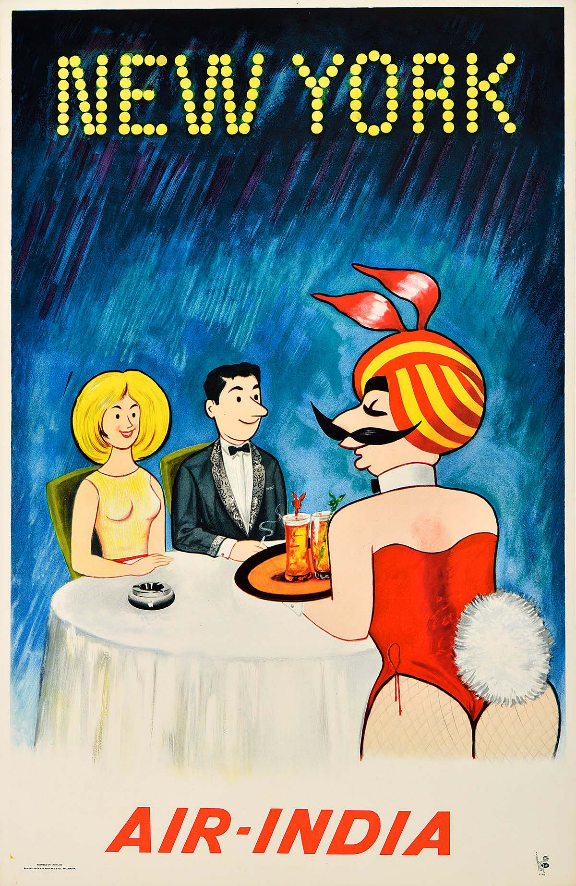
Air-India New York, S. N. Surti, 1967. The Maharaja, dressed up as a Playboy Bunny and serving drinks to Hugh Hefner in New York, is one of 191 posters catalogued in Air-India’s Rogue’s Gallery (1977). The cosmpolitan Maharaja context-switches seamlessly and is described by the airline’s publicity department as “conceived by Bobby Kooka, delivered by Umesh Rao, raised by Jal B. Cowasji, adopted by the world.”
The Indian music press, it seems, does not know whose taste it has borrowed. Taste arrives through osmosis and then solidifies into something like instinct. It’s like that moment at a dinner party when someone says something strange and you glance at your bestie or someone with the right kind of power in the room for clues about how to arrange your face.
Once a framework for evaluating music becomes invisible, it just feels natural, and this is when it feels like it is yours. I’m not suggesting that one walk through life constantly holding the genealogy of their aesthetic judgements at hand, I just want to notice how, when we stop noticing entirely where our musical standards are coming from, then our tastes, inherited through choice or circumstance just feel like our own perception.
The Sonic Passport
Return, for a moment, to 2024
Hanumankind’s Big Dawgs has just gone viral. As the rest of the world is catching on, Indian Music Diaries runs an article that notes the reaction videos exclaiming, “There’s no way this guy is Indian!” The piece doesn’t bother to spot the patronizing behaviour. There’s a gleeful paragraph on the “American accent” hitting the listeners “like a pile of bricks” and leaving them “shell shocked and pleasantly surprised.” What exactly had the world already decided an Indian rapper was going to sound like, that makes a blaccent a ‘pleasant surprise’?
The writing is mirroring the international audience’s logic so faithfully that it does not even seem to notice. And honestly, this makes sense. Hanumankind’s pitch-perfect assimilation of Southern rap was the sonic passport that landed him safely inside India’s indie hip-hop scene in the first place. His Houston upbringing supplied the marinade, and he would soak up the cadences birthed from a specific history of African American dispossession and reinvention. The themes doing the heavy lifting in his songwriting hype up the hustle, self-reliance, the underdog outsider, relentless ambition, and eventual vindication. This thematic catalog is like the greatest-hits package of mainstream American rap, fully road-tested for commercial viability. It is emotionally direct and culturally portable enough to frisbee out over borders without friction. The songs ride smooth on the genius of producers like Hyderabad-based Kalmi and Bangalorean Parimal Shais, who have each built very distinctive vehicles marrying South Indian rhythms and Carnatic textures and melodic sensibilities into trap, grime and hip-hop: the resulting soundscapes are hard to even describe, let alone name. The critique extends no curiosity to why the songs work so well.
“Distinctly Un-Indian”
Let’s talk about legitimacy, and how it is smuggled discreetly inside the art that it certifies. In 2016, indie pop duo Parekh and Singh released a music video that looked like Wes Anderson had made it. The band’s saccharine production and reflective softboi lyrics found a home inside the visual language executed with the meticulousness of a very serious child building a dollhouse, all of which lend a studied fluency to the band’s extension of the Western legacies they were pulling from – ranging from Jason Mraz, to Kings of Convenience to Woody Allen, depending on who was doing the describing.
A British label, Peacefrog Records, signed them. A Guardian profile followed, written by an India-based journalist writing for a British readership, and reads like peak self-congratulatory liberal cultural politics, but manages to do something more interesting than simple colonial condescension. It documents a genuine cultural hinge-point. Underlying the somewhat clumsy formulation that the band’s music “sounds distinctly un-Indian, as though it could have been produced in any part of the world”, is the tipping point at which a generation of Indian musicians found license to refuse “lazy Western stereotypes of what Indian music should be”. Let’s overlook for now how it slides past why Western audiences feel entitled to such stereotypical expectations in the first place. More interestingly, is sounding placeless really making anything better, then?

Recording of a khayal in Raag Jogiya by Gauhar Jaan, 1902. The first Indian artist to record commercially for the Gramophone Company of London — the technology arrived in India on a mission, in the company’s own words, “to record native voices.” She ended every recording with the words: “My name is Gauhar Jaan.”
If Fanon’s mimicry describes the colonised consciousness ever-split by the white world it is performing for, Homi Bhabha argued that the same-same-but-different performance of the coloniser’s grammar back with enough fidelity to be recognisable but never mistaken for the original, disrupts the white man’s claim to cultural authority. Ironically, market logic has since perverted that disruption. It now commoditizes the slight deviation from the original – as long as it doesn’t threaten real power. The Guardian profile celebrates this achievement of the not-quite-an-imitation.
In a 2019 interview, Music Unplugged reproduced the Guardian’s observation that the music “features none of the stereotypical sitars and tablas that dominate India’s music scene”, verbatim and without attribution. Somehow the whole thing has the effect of confirming, rather than dismantling the stereotypes, because the dance is happening inside the frame where Indian pop music is evaluated against the Western default and everyone keeps turning up to dance.
A Crisis of Vocabulary
The Indian music criticism scene is a small ecosystem. Publications like Rolling Stone India, The Indian Music Diaries, Wild City, and a few other independent outlets are mostly oriented towards scene documentation, artist discovery and industry development rather than deep engagement with the music and the conditions producing it. There is, in other words, little infrastructure platforming music criticism as a serious cultural object, although, in 2026, it would be inaccurate to call the Indian pop music scene itself nascent. Perhaps what’s missing is the critical vocabulary. Qualities like placelessness capture at once the yearning and dissonance of growing up in India in the nineties. If Prateek Kuhad was irked at landing in Spotify suggestions next to Arijit Singh rather than John Mayer, it is because this costs him global legibility.
Amanda Weidman, in her history of Carnatic music, Singing the Classical, Voicing the Modern: The Postcolonial Politics of Music in South India, shows that the dynamic is structural, not incidental, when Carnatic music’s claim to being ‘classical’ indigenous high culture was assembled in dialogue with colonial standards of legitimacy. The tradition presenting as purely native is already pregnant with the encounter that produced it. The ecosystem is gestating a newer kind of Indianness now, pioneered by a diaspora gaze that brings the Western legacy home. Hanumankind does not need to market his fluency in Southern rap the way that Kuhad had to shop his influences.
Now, the Western gaze is no longer outside, gatekeeping credibility. The diaspora artist’s gaze completes the cultural circuit. Hanumankind, like others, reaches back into Indian culture from presumably hard-earned Western fluency and presents fun bits that the West already recognises. The discordant underdog self-myth that contradicts his affluent ex-Goldman Sachs background and 2024 stage embrace by Prime Minister Modi slips under the radar. The unattributed cholo-masculinity aesthetic aggressively pulsing through his visuals is forceful and recognisable, and gets written about, unnamed, as the serious image of India having made it.
There is a sigh of relief we are granted somewhere in all this. “Indianness” has become interesting to write about again, if only because its market-value has gone up.
Meanwhile, the Indian music press suffers from a crisis of confidence. The critical vocabulary it deploys, at its best, mimics the international press, or uncritically peddles the narrative-packaging designed by the musicians themselves. And at its worst, it is the equivalent of what the internet calls vague-posting – watery non-claims underlined by a fear of accidentally saying something. And so these reviews end up gushing about how the album is “a journey,” and that the artist “does not disappoint,” and that the sound is, and a minute of silence for how important this proclamation is, “uniquely their own.”
The vague-posting makes sense once you understand what it is for. There is the thing made – the song, the video, the brand, the narrative – the product arrives pre-interpreted, packaged with its own talking points. Then there is the press content reviewing the product. Everyone has put out their content, everyone is satisfied. Everyone has done their job.
References:
Bhabha, Homi K. “Of Mimicry and Man: The Ambivalence of Colonial Discourse.” In The Location of Culture, 85–92. London: Routledge, 1994.
Fanon, Frantz. Black Skin, White Masks. Translated by Charles Lam Markmann. New York: Grove Press, 1967.
Weidman, Amanda J. Singing the Classical, Voicing the Modern: The Postcolonial Politics of Music in South India. Durham, NC: Duke University Press, 2006.
Notes on a Gesture
Through a lost footage of Chandralekha’s reframing of Namaskar, Sanjita Majumdar explores what it means to write about a gesture that was not meant to be archived.
By Sanjita Majumder
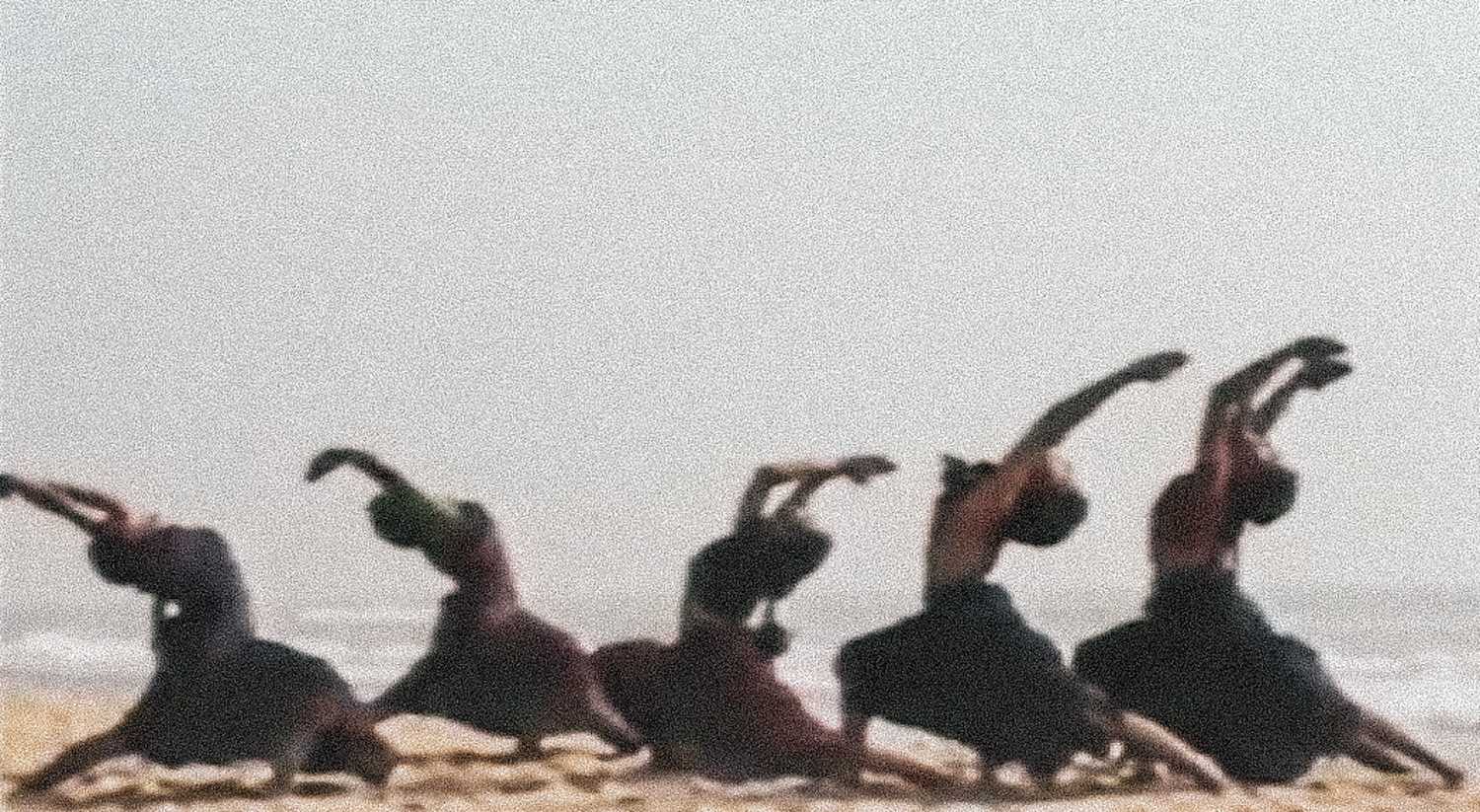
In my practice-based research into feminist resistances captured through moving image technologies, I work with lost archival footage of the choreographer/dancer Chandralekha and her radical reframing of the gesture of Namaskar within the repertoires of classical Indian dance. Traditionally, the gesture of Namaskar represents the subjugation of the female corpus within Brahminical patriarchy, it inscribes a devotional submissiveness, as docile bodies bending before religious scripts, and divine ordinances. Chandralekha reverses the traditional Namaskar by combining it with Ashtanga yoga and other martial arts. The revised Namaskar is a Virbhadrasana (Warrior Pose) combined with Hastauttarasana (Raised Arm Backbend Pose). The use of martial traditions results in a geometry that emphasises grounding and elevation at the same time, as figures press down firmly into the earth and the spine reaches upward in a gesture of resistance. The repurposed VHS footage is one of the only recordings of Chandralekha that shows her explaining her radical feminist interventions in classical Indian dance from SPACES, an alternative dance school she set up in Chennai. How does one write about this gesture that was not meant to be archived?
In the film, haptic analogue visuals and the interplay between still and moving images draw attention to a form of gestural cinema. I approach the found footage not simply as an archival document, but as the remnant of a gesture: a composite unit of embodied movement that records a form of feminist resistance in the process of disappearing. As a film theorist and practitioner who has worked closely with this archival material, I am interested in what art writing might do that documentation cannot. How might reflection and critique hold the textures of a body in motion, the choreographed politics of refusal, and the afterlife of an act of embodied feminist resistance?
My essay therefore asks: what forms, structures, and languages might critical writing develop in order to reflect on embodied practices that resist capture by structures of power? In the context of postcolonial India, how might art writing become a praxis of world-making rather than merely descriptive or paranoid interpretation. In order to respond to these questions, I look at the political conditions that shape the production of embodied feminist performance as well as forces of resistance emerging from absence, erasures, and contingencies of the archive. Eve Kosofsky Sedgwick’s essay, “You Are So Paranoid, You Probably Think This Essay Is About You”, proposes an alternative to paranoid modes of reading that have shaped much twentieth-century critical thought through the intellectual legacies of Freud, Foucault, and Marx. Rather than privileging revelation, suspicion, and the exposure of hidden structures, Sedgwick’s notion of reparative reading attends to affect, touch, and texture as forms of knowledge that emerge through embodied encounters with an artwork.
I understand the haptic image as a visual counterpart to this reparative mode of reading. Haptic images invite audiences to engage as embodied and sensory participants rather than detached observers. They challenge ocularcentric regimes of spectatorship by foregrounding proximity, tactility, texture, and affect. In this sense, I propose that art writing as an embodied feminist practice might similarly attend to what is felt, sensed, and encountered in an artwork, rather than only to what can be revealed, decoded, or exposed. To write about embodied feminist resistance, then, is also to develop a language capable of attending to textures.
Important for any critical writing on embodied feminist practice is the question – How does the body say No; how does it refuse and resist subordination?
The VHS is one of the only recorded performances of Chandralekha that shows her everyday training routine with dancers from SPACES, an alternative dance school she set up in Chennai; it also shows her explaining her radical feminist interventions in classical Indian dance. By the 1950s, Chandralekha was already a celebrated figure in classical dance. Yet she walked away from fame, rejecting the Brahminical and nationalist ideologies that were steadily defining performance arts in postcolonial India. In the years that followed, she immersed herself in feminist organising, Marxist critical writing and political activism in India and abroad. It was this theoretical and political engagement that laid the conceptual grounds for her return to stage in 1984 with a radical feminist intervention in classical Indian dance that was unapologetically sensual and iconoclastic. As a choreographer Chandralekha went beyond challenging oppressive gender hierarchies and the existing violence against women in patriarchal societies by reframing and navigating the system from within, producing a counter-archive of embodied feminist resistances. Her choreographies and writing on performance work in tandem, they are critical as well as generative, because she does not merely critique but radically implements them through her practice.
In her essay, ‘Militant Origins of Indian Dance’, Chandralekha argues that origins of classical Indian dance can be found in labour, combat, sexuality, collective movement and the disciplined intelligence of the body. The martial and communal roots of traditional dance forms were actively erased by the Brahminical establishment that appointed itself as custodian of traditions, mobilising Sanskrit texts as an ideological tool to legitimise and reinforce gender and caste hierarchies, effectively barring marginalised communities from laying claims to a shared cultural inheritance. The concept of Lāsya-tandava, or Militancy with Grace reclaims the political agency of the female body; it recovers the roots of classical dance in collective and martial practices.. Lāsya derives from the Sanskrit word ‘las’, which means playful, graceful and to appear shining. In her work, Chandralekha yokes together feminine grace (lāsya) with the martial forms (tandava). Historically, British colonialism colluded with the Brahminical establishment to domesticate lāsya as pure devotional grace while stripping it of its martial and erotic charge, which was displaced onto the body of the devadasi. Stigmatised as illicit temple prostitutes by colonial administrators and dispossessed of their livelihood and art by the Brahminical elite, the devadasis were criminalised and banished from the social sphere, while lāsya itself was reduced to pure devotional hymns, stripped of its sensuous and erotic aspects. Repressing the erotic aspects of lāsya turns the feminine performing body into a hollow vessel onto which patriarchal-colonial ideologies of reproductive control and submission could then be inscribed.
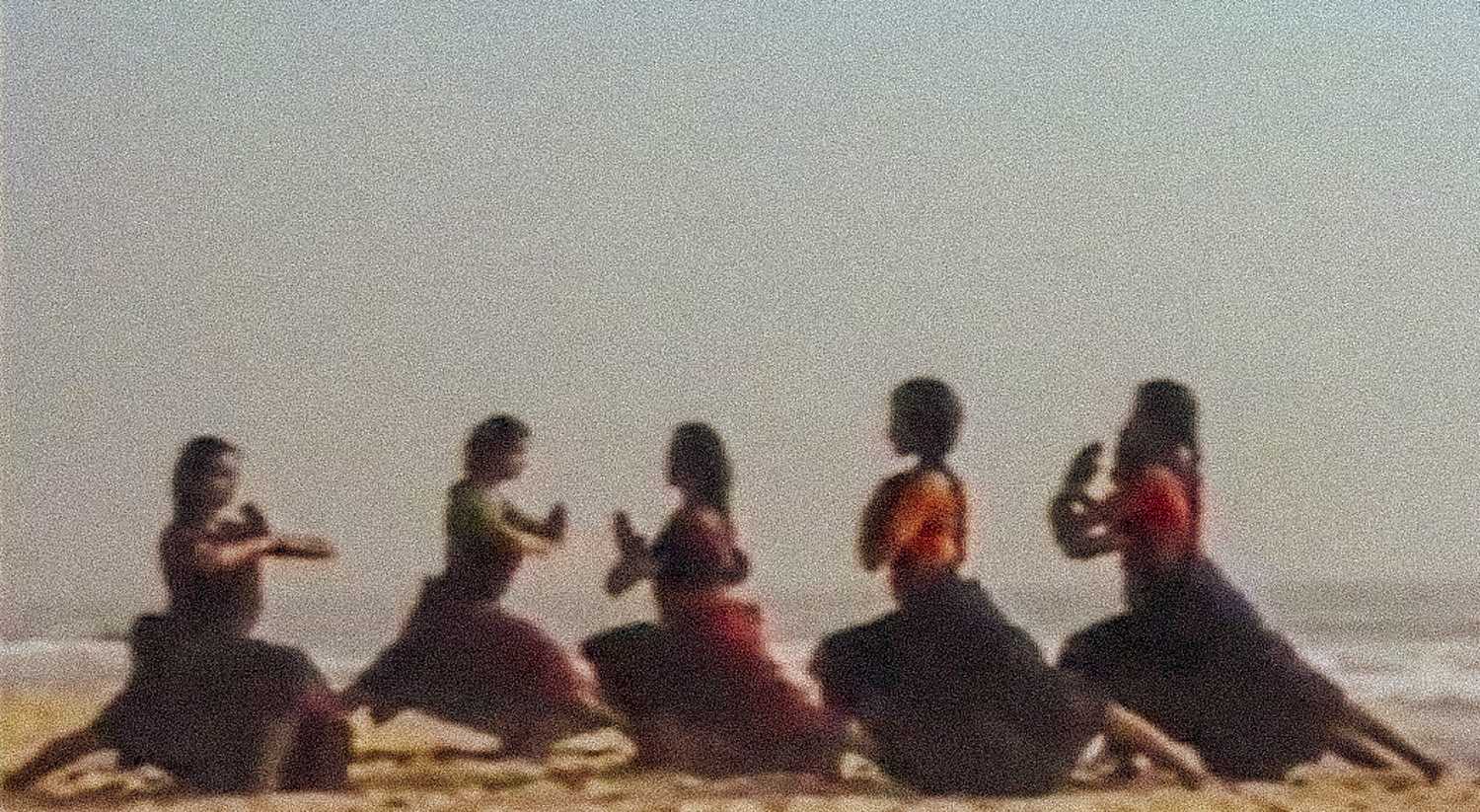
In the film, Chandralekha and the dancers practice Namaskar on Elliott’s Beach. The movements are rooted in the araimandi stance of classical Bharatnatyam dance, a basic squat position in which dancers ground themselves through the pelvis, bending deeply at the knees while focusing on the upward spine. For Chandralekha, the araimandi makes Bharatnatyam a powerful dance, and its origins can be traced back to ancient martial arts such as Kalaripayattu from Kerala and other wrestling traditions found across akharas. The bent knee grounding stance of the araimandi is foundational to martial arts as far reaching across Asia as Karate, Tai Chi and Thai boxing. She responds by extensively training dancers in the martial stance of rectitude, where the upright spine symbolises feminist ethics, political agency and the dignity of the body. The Namaskar that emerges, is far from the soft, supplicant, gentle and appeasing one found in classical Indian dance, instead it conveys a militant dignity, where the terms of the submission are clear. The embodied resistance inscribed into the Namaskar is not a confrontation or a rupture of the traditional gesture; rather it is fluid and mutable; it is refusal to comply with a patriarchal-colonial logic that demands submission. As Chandralekha explains in the film –– What is Namaskar? To me it carries the potential of the dignity of the body – what does Namaskar mean? Is it just a genuflection? that you dive at someone’s feet, you go limp? NO. To me the concept of Namaskar is that all of your body will show what is the dignity of the body.
When dealing with archival erasures of feminist resistance, writing about such art forms becomes a counter-archive. It is Chandralekha’s engagement with critical theory that adds political weight to her physical refusal, infusing it with a radical resistance through militancy with grace. Witnessing this ephemeral performative gesture in the archive creates an urgent responsibility to work with forms of language that can convey its texture and graceful dignity. Following Sedgwick’s reparative reading it may well be a desire to feel how this lost gesture offers political hope.
Work References:
Chandralekha. “Militant Origins of Indian Dance.” Social Scientist, 1980.
Sedgwick, Eve Kosofsky. Touching Feeling: Affect, Pedagogy, Performativity. Duke University Press, 2003.
Criticism as an afterlife
What happens when criticism evolves from a tool of judgment into a creative practice that extends the life of a work?
by Shereen Saif
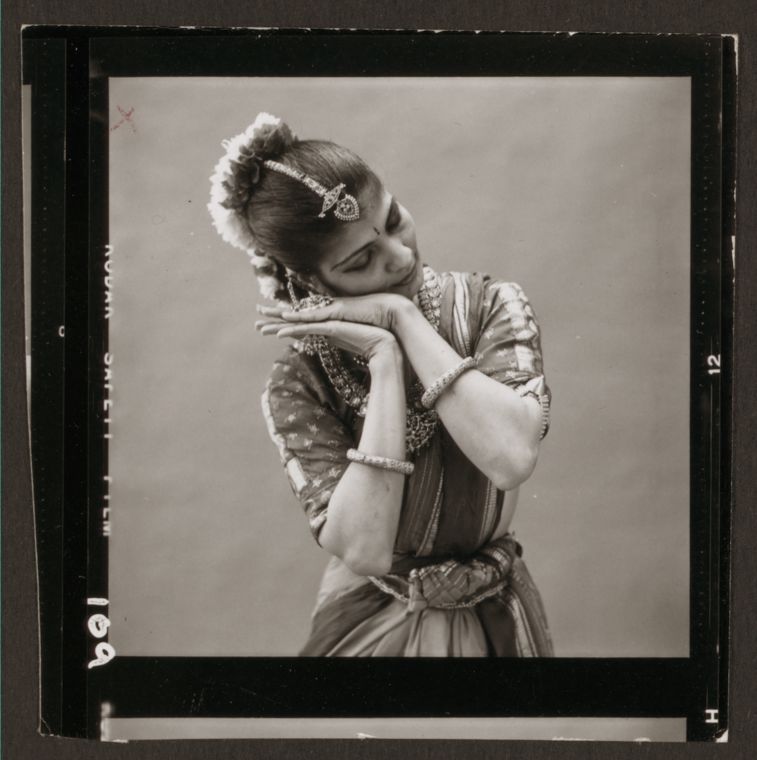
Shanta Rao, one of India’s most influential classical dancers of the twentieth century, spent much of her career fending off strong opinions about how classical dance ought to look. Trained in forms including Kathakali, Bharatanatyam and Mohiniyattam, she often found herself at odds with critics who preferred clearer boundaries between traditions. When she made her Bharatanatyam debut at the Music Academy in Madras in 1942, reviewers dismissed her dancing as “stiff,” “exaggerated” and “rather masculine,” arguing that traces of Kathakali had seeped too visibly into her performance.
Then something unexpected happened.
The British dance critic Arnold Haskell saw Rao perform and described her as “a dancer of genius.” His words did more than praise her. They offered a counter narrative, inviting audiences to see her work with fresh eyes.
I often return to this story because it reminds me that performance histories are shaped not only by what happens on stage but also by the people who write about them. A performance is fleeting by nature. It disappears the moment it is over. What remains are conversations, reviews, photographs, documentation, memories and rumours. Writing, then, becomes one of the ways a work continues to live.
Yet, writing on performance often finds itself caught between a few familiar positions: the harsh review, the detached journalistic blurb, or the diplomatic insider response. More often than not, the critic writes from outside performance practice, becoming a kind of referee who decides what counts and what does not.
Performers rarely don the garb of a critic with confidence. To write critically about one’s peers or seniors is a precarious undertaking. We are entangled in the same artistic communities, sharing stages, festivals, friendships and futures. Direct criticism can feel risky. Silence often feels safer.
So, I find myself asking a different question: what if criticism did not begin with judgment? What if it could be a way of noticing what stays with us through ideas, images and sensations that continue to resonate long after the performance has ended. What if criticism could generate new ways of seeing, and perhaps even new works of art?
Criticism as an Act of Continuation
Performance criticism is hardly new. From Greece to India, thinkers like Aristotle and Bharata were deeply interested in why some performances moved audiences while others did not. Yet, the very words critic and criticism derive from the Greek kritikos, meaning “able to discern” or “able to judge.” It is perhaps no surprise then, that for centuries the critic’s role was understood as one of evaluation. As print and later digital media expanded, the review became the default mode of criticism: a place to pronounce success or failure and shape public opinion.
By the 1960s, however, that way of thinking began to shift. In Against Interpretation, Susan Sontag argued that critics had become too busy explaining art instead of experiencing it. Rather than asking only what a performance means, she encouraged us to pay attention to how it catches us off guard and changes the way we see, hear and feel. Since then, many writers have imagined criticism differently not as a verdict but as a form of attention. This is where I find myself drawn to Matthew Goulish and Jane Rendell.
In Small Acts of Repair, Goulish writes about what he calls “miraculous moments”: unexpected instants of a performance that stay with us long after the curtain call. Instead of asking whether a work is good or bad, he asks us to notice what continues to resonate, what keeps unfolding in our minds, and what new questions it leaves behind. Those lingering moments can become the starting point for entirely new acts of creation. In that sense, criticism does not close a conversation; it keeps it alive.
Rendell arrives at the similar place from a different direction. In Site-Writing, she argues that writing about art can never be completely objective because the writer is always part of the encounter. Rather than pretending to stand outside the work, she proposes “writing alongside” it by allowing memories, emotions and lived experience to become part of the critical response. Criticism, then, becomes about entering into a relationship with a work and seeing where that relationship might lead.
I found these ideas both generous and liberating. What would happen if, instead of looking for flaws, I paid attention to what stayed with me? What if I allowed a performance to linger and followed wherever it led? I wanted to see what would happen if I put that into practice.
An Encounter, a Creative Response
Last year, as part of Soho Theatre Walthamstow’s launch season, I watched Bog Witch, a solo performance by British performance artist Bryony Kimmings. Blending comedy, storytelling and performance art, the show draws on Kimmings’ move from urban life to the countryside as it explores consumerism, ecological crisis and our relationship with the natural world.
It was hilarious and rich in inventive image-making. Yet what stayed with me was something else entirely: the cackling witch who appeared in a flash of light at the beginning of the performance, only to re-emerge later in abstract images that I remember as evoking a witch being burned at the stake. Or perhaps that is simply how my memory chose to hold on to it.
In Orange Dogs and Memory Responses, Katja Hilevaara reminds us that memory is imaginative as much as it is archival. We do not replay performances exactly as they happened; we reconstruct them through subjective recollection, and what we remember can be as significant as what actually unfolded on stage.
The witch became that kind of memory for me. Not just the figure Kimmings created, but one my own imagination continued to shape: an unruly feminine presence existing outside conventional expectations of age, beauty and decorum. It lingered somewhere between performance and recollection, refusing to leave.
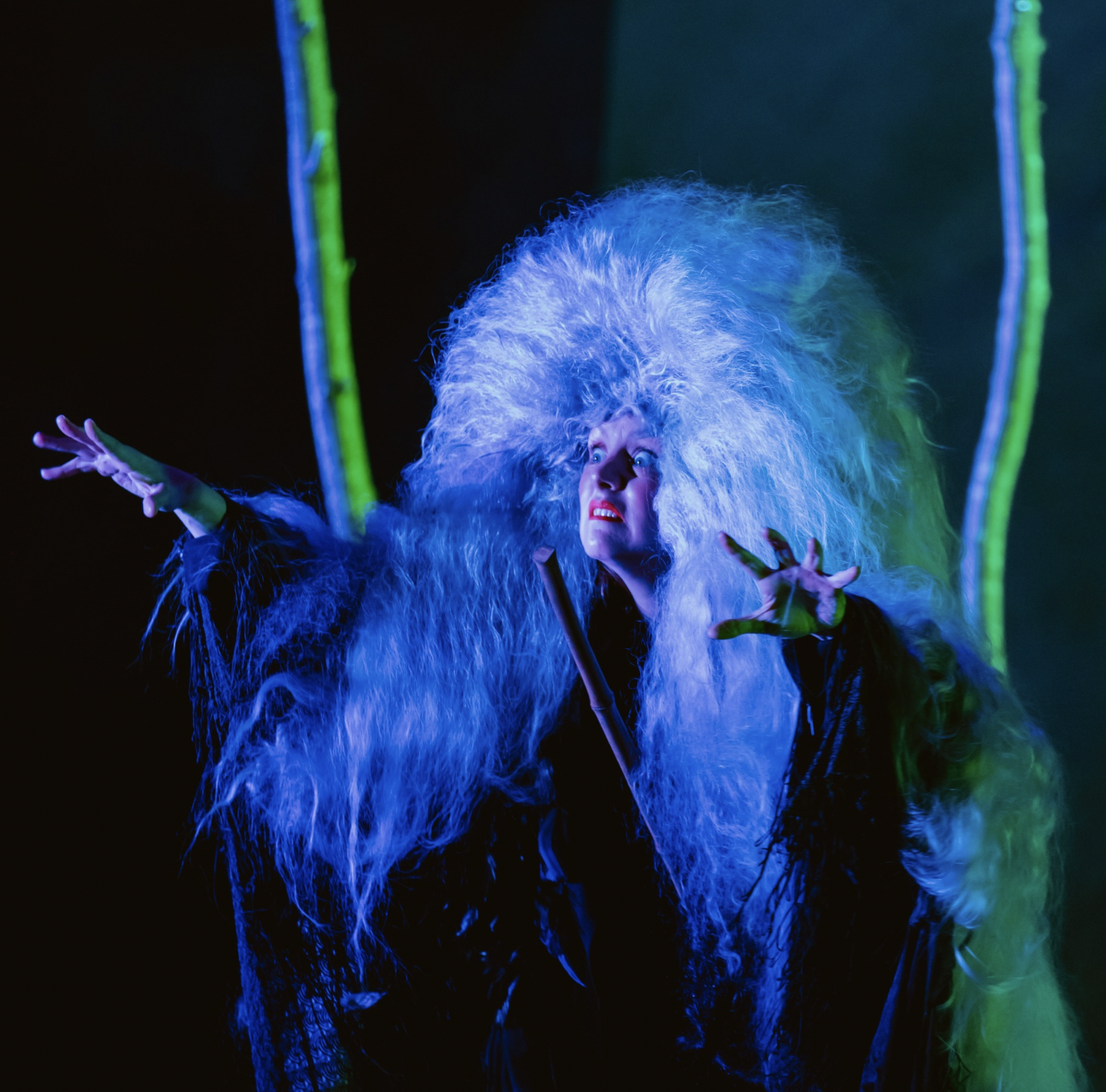
I realised that what fascinated me was not the witch as a supernatural figure but as a woman who had slipped beyond the boundaries of polite society. I kept returning to her, wondering what might happen if she were seen not as someone to fear but as someone to learn from.
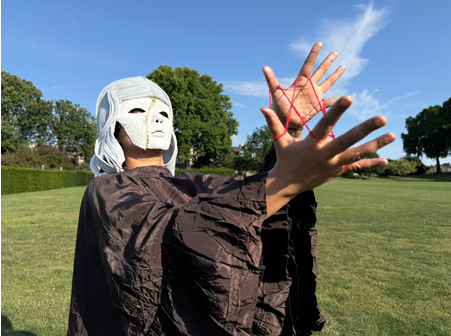
That question eventually found its way into Polymorpher, a collaborative performance co-created with Reema Assaf and Suyoung Chun. Weaving together ritual, shadow theatre, storytelling and dance, the work follows three sisters on a journey of transformation under the guidance of The Elder, a figure who walks between worlds. Here, the “witch” is reimagined as The Elder, a knowledge keeper and healer through whom I explore ageing beyond familiar stories of decline and invisibility. The witch also appears in another form in the show as a potion maker and storyteller. In that sense, Polymorpher became my way of writing alongside Bog Witch. Rather than evaluating Kimmings’ work, it entered into a conversation with it, extending one image into another and allowing a lingering encounter to become the seed of a new artistic work.
Perhaps this is what the performer-critic can do best: not deliver the last word on a work, but give it an afterlife.
References:
Bottoms, Stephen, and Matthew Goulish. Small Acts of Repair: Performance, Ecology, and Goat Island. Abingdon: Routledge, 2007
Hilevaara, Katja. Orange Dogs and Memory Responses: Creativity in Spectating and Remembering. In M. Reason & A. Mølle Lindelof (Eds.), Experiencing Liveness in Contemporary Performance: Interdisciplinary Perspectives (pp. 34–47). Routledge.
Khokar, Ashish Mohan. “Shanta Rao: The Enigma and the Legacy.” Narthaki. Accessed, 2026. Narthaki article
Rendell, Jane. Site-Writing: The Architecture of Art Criticism. London: I.B. Tauris, 2010.
Sontag, Susan. Against Interpretation and Other Essays. New York: Farrar, Straus and Giroux, 1966.
List of Images
- Billy Rose Theatre Division, The New York Public Library. Shanta Rao. The New York Public Library Digital Collections, 1850–2020. https://digitalcollections.nypl.org/items/9d4acde0-ff8a-012f-578e-58d385a7bc34.
- Kimmings, Bryony. Bog Witch production still. Photograph by Rosie Powell. Instagram post, 2025. Accessed 15 June 2026.
- Polymorpher. Rehearsal photograph of the artist as The Elder. Photograph by Suyoung Chun, 2026.
About the Author
Shereen Saif is a writer and multidisciplinary artist whose practice spans dance, theatre, oral storytelling, conceptual art and foraging. Based between Bangalore, Dubai and London, her work explores the intersections of movement, narrative, technology and ritual. Rooted in the Indian ethos, she draws on gesture, symbolism and performance traditions to investigate identity, memory, belonging and oral tradition.
On Refusing to Separate Art from Institutions
Through two case studies of structural injustice in the Indian art world, this essay challenges art criticism that ignores institutional contexts and calls for a writing practice that accounts for labor conditions and systemic power.
By Neha Limani
Art writing and criticism have carved an important space in the arts. Whether through exhibition reviews, theoretical essays, or academic papers, writing about art comes in different forms and styles. Yet in Indian contemporary art, marked by caste, class, gender discrimination, and workplace abuse, and structural exclusion, it is no longer enough to engage with works on a purely formal basis. Following Michael Schreyach, criticism should be addressed to a public rather than only to specialists and should reflect a real confrontation between writer and work, not just technical evaluation. For Matthew Bowman, art criticism is also a collaborative practice that shapes communities around art. Combined with Daniel Neofetou’s insistence that political art criticism must address the conditions it names rather than neutralise them, these positions frame my question: what role can art writing play when the art itself is produced and circulated by compromised institutions?
Through analysing two events—Anita Dube’s use of Aamir Aziz’s anti‑CAA poem without his prior knowledge and #MeToo‑related allegations against the co-founder of the Kochi‑Muziris Biennale, this essay examines how exhibitions, biennales, and art fairs frame works tied to marginalised communities and politics while remaining sites of contestation. It argues for a form of art writing that refuses to separate artworks from the institutions and labour conditions that make them possible. Instead, it proposes modes of writing that hold artworks, institutional violence, and conditions of labour in the same frame, refusing to let criticism function as a tool of reputational laundering.
Poet, Artist and ‘Ethical Lapse’
On April 20th, 2025, poet Amir Aziz, through social media posts, accused artist Anita Dube of using his internationally acclaimed poem “Sab Yaad Rakha Jayega” in works for the exhibition titled Three Storey House at Vadhera Art Gallery without his knowledge and consent1. The poem had its own life, and the way Dube embroidered it on velvet cloth and placed it in a gallery space for commercial purposes was not ideal, according to Aziz. Statements were given by both the gallery and the artist describing it as an “unintentional mistake” and an ethical lapse2, a framing that risks turning a structural pattern of extraction into a one‑off moral oversight (McCartney 2022). The controversy ended on the same platform when, in August, 2025 Aziz posted on his Instagram that the gallery had resolved his concerns.
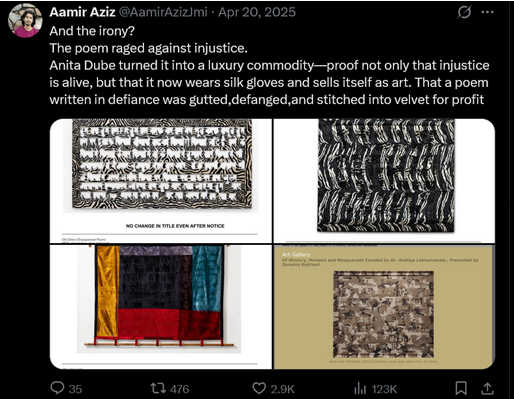
Figure 1. Screenshot of a tweet by Aamir Aziz (@AamirAzizJmi) about Anita Dube’s use of his poem “Sab Yaad Rakha Jayega”, posted on 20 April 2025.2
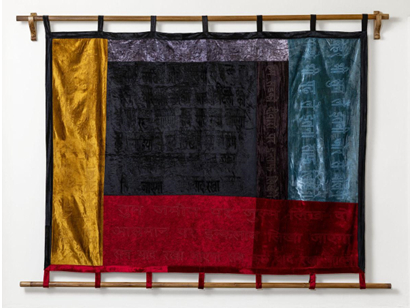
The fire died down. People moved on. Benefitting from the social popularity of the themes of ‘Dada’ and ‘Animal farm’4, the exhibition note wants to access the political weightage of these words without actually practicing them. As Neofetou notes, political art criticism that restricts itself to formal or thematic analysis tends to dissolve the particularities of how works are produced and circulated, turning politics into content rather than relation (Neofetou 2021). When dealing with artworks which are termed ‘political’, we often feel the violence is always what the piece is talking about and not what it itself has been perpetuating. The usage of Aziz’s poem without giving him the credit was an issue, but the material of the artworks and the space they were displayed in were for a certain class and not for the marginalised for whom Aziz writes (Bhasthi 2025). This is not an isolated tension. Writing on Dalit art in Indian exhibitions, Aarushi Punia shows how institutions often celebrate “marginalised” work while quietly stripping it of its political and caste‑marked force, keeping structural hierarchies intact (Punia 2025). The questions asked by him should belong in the criticism of an exhibition reviewer. By not addressing these issues, the writer and the publications both become irrelevant in the larger scheme of art world. From the captions of the artworks to the gallery’s response, every layer worked as a gateway into a system well known for representing marginalised voices while excluding them structurally. To understand that system, we cannot look at artwork, artist and institution separately; criticism has to hold them together if it wants to engage incidents like this critically.
“Me Too” at the Biennale
In January this year, Bose Krishnamachari, co-founder of the Kochi-Muziris Biennale, resigned from his roles as president and member of the board of trustees of the Kochi Biennale Foundation (KBF)5. It later emerged that his resignation came in light of a sexual harassment complaint filed against him by one of the female employees6. This was not the first time the biennale had faced such allegations: in 2018, another co‑founder, Riyas Komu, stepped down from all organisational roles after accusations of sexual misconduct during the #MeToo moment7. The repetition is telling. An institution celebrated for progressive programming and public discourse around rights has, more than once, had to reckon with allegations of gendered violence from within its own workforce. Writing on the scale and significance of “India’s first and only biennale”, some coverage mentions these allegations only in passing, folded into a celebratory narrative of the institution8. McCartney shows how institutions often sustain the fiction that art and artists can be separated, even while relying on progressive rhetoric about rights and representation (McCartney 2022). In Kochi’s case, public programming around women’s rights sat uneasily alongside allegations by women workers within the same institution.
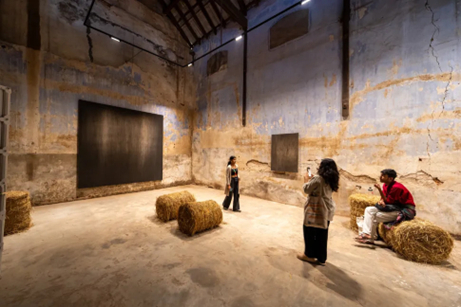
As Federica Arcoraci notes, contemporary museums and biennales operate through an integration–exclusion dialectic: they integrate certain critical or marginal discourses as cultural content while excluding the very subjects and workers whose lives those discourses concern (Arcoraci 2024). In such a context, art writing that only offers formal analysis or institutional praise is not neutral; it actively participates in that integration–exclusion logic by leaving readers unaware of the labour conditions that make the art possible. Do we want our readers to remain unbothered and unaware of these conditions, and in doing so become irrelevant or do we write the complexities and let them navigate artworks, artists and institutions together?
Art writing must refuse to separate artworks from the institutions and labour conditions that make them possible. Following Mikkel Bolt Rasmussen, institutional critique works with art’s relative autonomy not to escape institutions but to expose and transform their operations from within (Rasmussen 2017). For criticism, such an approach means refusing to deprive readers of knowledge about artists’ backgrounds or institutions’ exploitative histories. Painting a fuller picture helps us understand complex histories; if an artwork cannot bear that understanding, it was never great from the start (McCartney 2022). Our encounters with artworks should not be organised around isolation but around knowledge of the systems that shape them. Just paraphrasing wall texts is not art writing. As Schreyach reminds us, criticism must reflect the writer’s confrontation with the object in ways that serve the public. The Dube–Aziz and Kochi cases show how deeply the system depends on exploitation; we need criticism that keeps these entanglements visible and that stops pretending artworks are innocent when their conditions of production are not.
Footnotes:
- https://theprint.in/feature/artist-anita-dube-uses-caa-protest-poem-in-artwork-poet-aamir-aziz-says-its-plunder/2597751/
- https://www.facebook.com/dube.anita/posts/pfbid02eaqWNj2kZWAsvSU4yYTVuKEcGEvqBuqi4qCVDF4M9sWHXLvhu2Seg39z9iQPCzyyl
- https://www.instagram.com/p/DN0I8YmWmXb/?hl=en
- Vadehra Art Gallery, “Anita Dube: Three Storey House,” exhibition page, accessed 17 June 2026,https://www.vadehraart.com/exhibitions/251/works/images6025/
- https://www.vadehraart.com/exhibitions/251-anita-dube-three-storey-house-d-53-defence-colony-new-delhi/overview/
- https://artreview.com/bose-krishnamachari-resigns-from-kochi-biennale-foundation/
- https://artreview.com/bose-krishnamacharis-resignation-from-kochi-biennale-came-after-sexual-harassment-allegations/
- https://thewire.in/women/riays-komu-kochi-biennale-me-too
- https://www.artbasel.com/stories/kerala-kochi-muziris-biennale-foundation?lang=en
- “The Sixth Kochi-Muziris Biennale Foregrounds Human Experience,” Observer, 11 March 2026, accessed 18 June 2026, https://observer.com/2026/01/kochi-muziris-biennale-2026-interview-nikhil-chopra-curator-art/
References:
McCartney, Nicola. 2022. “In Light of #MeToo: Reconsidering the Art/Artist Relationship for Better Futures.” Visual Studies,. https://doi.org/10.1080/1472586X.2021.2012248.
Neofetou, Daniel. 2020. “Political Art Criticism and the Need for Theory.” Arts 10 (1): 1. https://dx.doi.org/10.3390/arts10010001
Bhasthi, Deepa. 2025. “The Hidden Hypocrisy of India’s ‘Radical’ Artworld.” ArtReview. May 21, 2025. Accessed June 18, 2026.
Punia, Aarushi. 2025. “The Political Sense of Dalit Art in Indian Exhibitions.” Philosophy World Democracy, 14 April 2025. Accessed 18 June 2026.https://www.philosophy-world-democracy.org/posts/article/the-political-sense-of-dalit-art-in-indian-exhibitions
Arcoraci, Federica. 2024. “The New Institutional Critique and the Contestation of the Museum’s Role in Contemporary Society.” Polygraphia (online essay). Accessed 18 June 2026. https://polygraphia.it/wp-content/uploads/2024/10/26-Arcoraci.pdf.
Rasmussen, Mikkel Bolt. 2017. “A Note on Socially Engaged Art Criticism.” Field 6 (Winter). Accessed 18 June 2026. https://field-journal.com/issue-6/a-note-on-socially-engaged-art-criticism/
Baruah, Antara. 2025. “Artist Anita Dube Uses CAA Protest Poem in Artwork, Poet Aamir Aziz Says It’s ‘Plunder’.” The Print, 21 April 2025. Accessed 18 June 2026. https://theprint.in/feature/artist-anita-dube-uses-caa-protest-poem-in-artwork-poet-aamir-aziz-says-its-plunder/2597751/
Dube, Anita. 2025. “I am replying to this social media trial…” Facebook, 21st April, 2025. Accessed 18 June 2026. https://www.facebook.com/dube.anita/posts/pfbid02eaqWNj2kZWAsvSU4yYTVuKEcGEvqBuqi4qCVDF4M9sWHXLvhu2Seg39z9iQPCzyyl.
Aziz, Aamir (@aamir.aziz.3785). “I’m pleased to share that the Vadehra Art Gallery has amicably resolved my concerns…” Instagram, August 26, 2025. Accessed June 18, 2026. https://www.instagram.com/p/DN0I8YmWmXb/?hl=en
Vadehra Art Gallery. 2025. “Anita Dube: Three Storey House.” Exhibition overview. Accessed 18 June 2026. https://www.vadehraart.com/exhibitions/251-anita-dube-three-storey-house-d-53-defence-colony-new-delhi/overview/
ArtReview. 2026. “Bose Krishnamachari Resigns from Kochi Biennale Foundation.” ArtReview. January 14, 2026. Accessed 18 June 2026. https://artreview.com/bose-krishnamachari-resigns-from-kochi-biennale-foundation/
ArtReview. 2026. “Bose Krishnamachari’s Resignation from Kochi Biennale Came after Sexual Harassment Allegations.” ArtReview. March 25, 2026. Accessed June 18, 2026. https://artreview.com/bose-krishnamachari-resigns-from-kochi-biennale-foundation/
The Wire Staff. 2018. “#MeToo: Artist Riyas Komu Steps Down From Kochi Biennale Management Positions.” The Wire. October 20, 2018. Accessed June 18, 2026. https://thewire.in/women/riays-komu-kochi-biennale-me-too
Art Basel. 2026. “Kerala, Kochi-Muziris Biennale Foundation.” Art Basel. Accessed 18 June 2026. https://www.artbasel.com/stories/kerala-kochi-muziris-biennale-foundation?lang=en
Komireddi, Cleo Roberts. n.d. “Looking back on 10 years of the Kochi-Muziris Biennale.” Art Basel. Accessed June 18, 2026. https://www.artbasel.com/stories/kerala-kochi-muziris-biennale-foundation?lang=en
LOGIN to see more
To see all the content we have to offer, login below
OR
 SIGN IN WITH GOOGLE
Don't have an account?
REGISTER FOR FREE
REGISTER FOR FREE
Registration is completely free, stay connected to Serendipity Arts

